
Fasting Isn't One-Size-Fits-All; Here's What Changed Everything for Our Patients
By Dr. Suzanne Tang | Inspire Natural Wellness | Newport Beach, CA
The Lab Results That Stopped Me in My Tracks
"What are you doing differently?" I asked — genuinely floored — as I reviewed her lab work.
One of our wellness members at Inspire Natural Wellness in Newport Beach had been struggling for years: weight loss resistance, stubborn belly fat, rising LDL and blood glucose, chronic joint pain, brain fog, fatigue, and mood swings from years of caretaking for her ailing mom. We had already made real progress together dietary changes, regular movement, hormone replacement therapy, targeted supplements — but her weight loss had plateaued. She'd also been on a GLP-1 medication prescribed elsewhere that she was ready to move away from.
Her answer? "I started doing 36-hour fasts weekly and feel amazing. The fatigue, inflammation, belly fat, bloating, and cravings are gone and I lost 16 pounds."
A few days later, a close friend at my wellness book club had just completed a 72-hour fast inspired by Dr. Mindy Pelz's book Fast Like a Girl. Her disruptive perimenopausal symptoms, hot flashes, insomnia, relentless fatigue, had significantly improved.
As someone who grew up in an immigrant household where food scarcity carried real weight, I had always been hesitant about extended fasting. But I took these as signs. I dove in, with community support, honest experimentation, and a whole lot of herbal tea — to see what fasting could do for perimenopause and for the women we serve.
Here's everything I learned.
First Things First: Prepare Your Body Before You Fast
My first attempt? A 24-hour fast the week before my period, after a busy social weekend, hosting family, and powering through an intense patient care day. I was hungry, under-hydrated, and running on fumes. Not the vibe.
What I learned: the setup matters as much as the fast itself.
For my second attempt, I spent the week prior eating more ketogenic — focusing on healthy fats, quality proteins, and vegetables — to help my body shift into fat-burning mode more efficiently. I also chose a lower-stress day and hydrated intentionally with tea, electrolytes in water, and plain filtered water.
The difference was night and day. No hunger. Sharp mental clarity. Sustained energy. And yes — my jeans fit better the next morning.
Pre-Fast Tips That Actually Work:
Eat low-carb, high-fat for 3–5 days before a longer fast to ease into ketosis
Gradually extend your fasting window by 1 hour per day
Hydrate aggressively with tea, electrolytes in water, and plain filtered water
Choose a low-stress, low-activity day for your first extended fast
Avoid jumping into extended fasts right before or during your period
What's Actually Happening in Your Body Hour by Hour
Fasting isn't just skipping meals — it triggers a highly orchestrated series of metabolic and hormonal shifts. Here's a plain-language breakdown of what your body is doing at each stage:
Hours 0–8 | Digestion Phase
Your body processes your last meal, absorbs nutrients, and insulin rises to store energy. You're in a building state.
Hours 8–12 | Early Fasting
Digestion completes. Blood sugar and insulin begin to drop. Your liver starts breaking down stored glycogen (sugar) to use as fuel.
Hours 12–16 | Metabolic Switch + Fat Burning
Glycogen stores deplete, and your body pivots to burning fat for fuel. Growth hormone begins rising to protect muscle mass. This is the foundation of the popular 16:8 intermittent fasting method.
Hours 16–24 | Ketosis + Gut Reset
The liver produces ketones to fuel the brain and body. Autophagy — your body's cellular cleanup process — kicks in, recycling damaged proteins and cellular components. Your gut microbiome begins to recalibrate.
Hours 24–36 | Deep Cellular Repair
Blood sugar stabilizes, ketosis deepens, and appetite hormones quiet down. Deep cellular repair accelerates. Many people report sharp mental clarity and sustained focus during this window.
48 Hours | Stem Cell Renewal
Your body enters high-gear cellular rejuvenation, promoting stem cell production to replace old tissue with new, highly efficient cells.
72 Hours | Immune System Regeneration
Fat oxidation and growth hormone elevation peak. Research suggests the body clears out old, damaged immune cells and initiates the regeneration of an entirely new immune system. This is the deep clean of deep cleans.
How to Break an Extended Fast (Without Undoing Your Progress)
This part matters more than most people realize. After a 24-hour-or-longer fast, reintroduce foods intentionally:
Bone broth — healing, gut-supportive, and easy to absorb First 30 minutes:
Fermented foods — cultured yogurt, sauerkraut, kimchi Next 30 minutes:
Prebiotic-rich foods — lightly steamed asparagus, broccoli, cabbage, cauliflower Then:
Clean protein — wild salmon, organic lean meats, or pasture-raised eggs Finally:
Then gradually return to your whole-food, low-refined-sugar diet
When to Pause — and When Fasting Isn't Right for You
Fasting is a tool, not a mandate. Here's when to hold off:
You're under significant stress or going through an emotional crisis
You're doing high-intensity endurance training
You're traveling or attending social events
You're under 18, pregnant, breastfeeding, or underweight
You have an active eating disorder
You're on medications that affect blood glucose or blood pressure
Always consult your provider before beginning extended fasts. Our team at Inspire Natural Wellness is here to help you assess whether fasting is appropriate for your unique health picture.
Fasting & Your Cycle: The Guide Dr. Mindy Pelz Wants You to Have
Here's what most fasting guides completely miss: if you have a menstrual cycle, fasting affects your hormones differently depending on where you are in your cycle. Ignoring this can work against you.
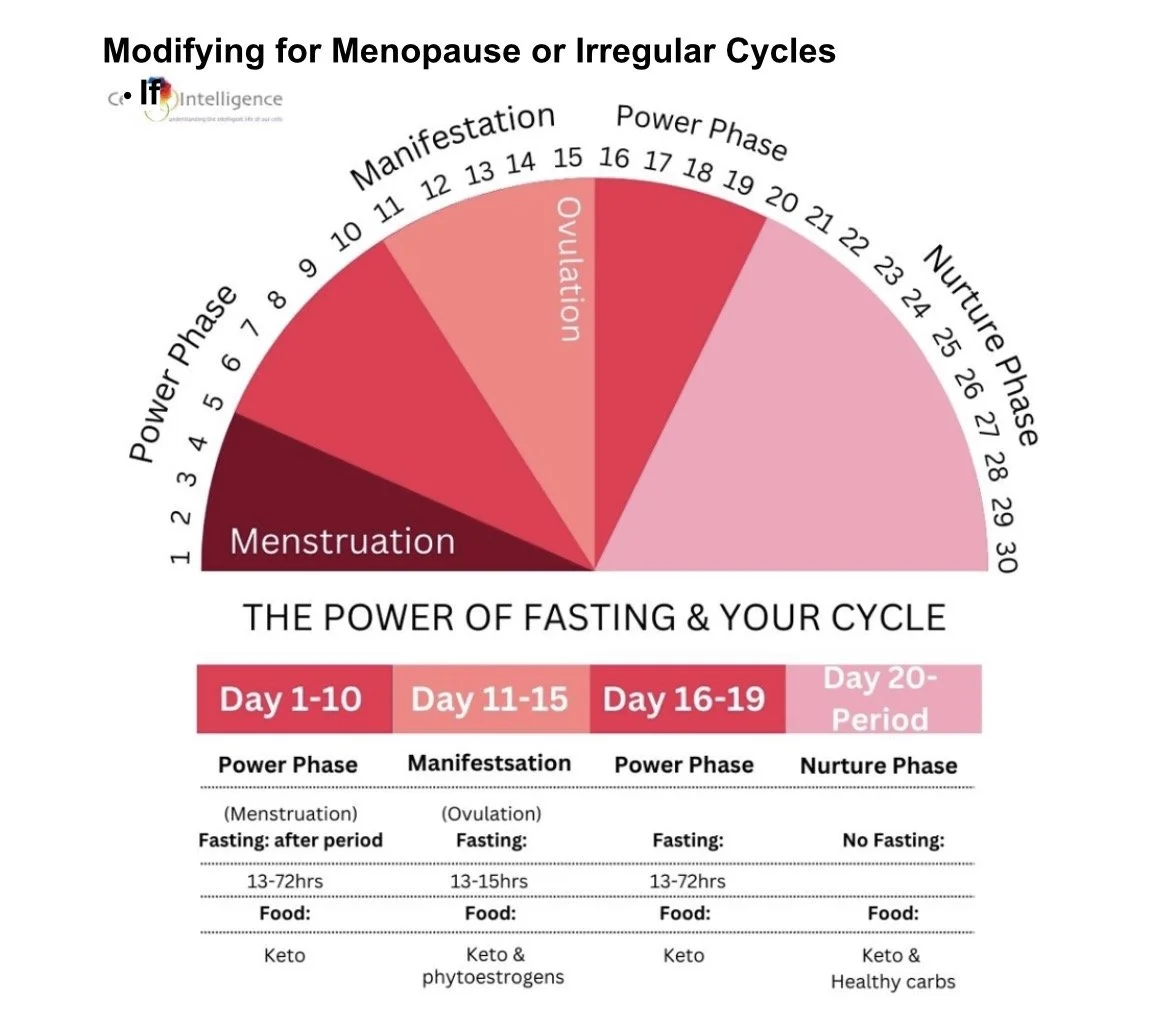
Phase 1 & 2 — Power Phases (Days 1–10 & Days 16–19)
Your fasting sweet spot. Estrogen is lower, your body is primed for metabolic flexibility, and weight loss is more accessible. This is the ideal time for longer fasts — 24-hour or 36-hour resets — and ketogenic eating. Fasting windows of 13–72 hours are appropriate here.
Manifestation Phase — Ovulation Window (Days 11–15)
Estrogen and testosterone are peaking. Aggressive fasting can elevate cortisol and work against these hormones. Keep fasting windows to 13–15 hours max. Prioritize hormone-feasting foods: cruciferous vegetables, probiotic-rich foods, and natural carbohydrates like sweet potatoes and fruit.
Nurture Phase (Days 20 Through Menstruation)
Progesterone is rising and your body is preparing to shed the uterine lining. Fasting during this phase is a stressor — it can lower progesterone and contribute to spotting or intense PMS. Stick to a 12-hour overnight rest at most. Focus on eating, resting, and nourishing yourself.
Adapting Fasting for Menopause + Irregular Cycles
Perimenopause/Postmenopause: Without a predictable cycle, variation is your friend. Rotate fasting lengths — a 13-hour fast one day, 15-hour the next, and a 24-hour reset once a week — to prevent your body from adapting and plateauing.
Irregular cycles: Start with a basic 12-hour overnight fast. Listen closely to your body. Prioritize protein, healthy fats, and fiber as your nutritional foundation, and adjust from there.
Ready to Explore Fasting with Expert Support?
Fasting can be a genuinely transformative tool — but it works best when it's personalized to your hormones, health history, and goals. If you're curious whether fasting belongs in your wellness plan, we'd love to talk.
Schedule a consultation with Dr. Tang and the Inspire Natural Wellness team in Newport Beach, CA.