
Filling Your Metabolic Wellness Cup
It has been a tumultuous start to the year, and many of us are feeling the weight of grief, overwhelm, and stress from the chaos and uncertainty in the world. As empaths, this collective heaviness can feel especially intense. There are moments when the suffering feels so immense that it leaves us feeling helpless.
Yet, crisis can also be a catalyst, for hope, awareness, and meaningful change. When we care for our mental, physical, and emotional health, we strengthen our ability not only to heal ourselves, but to show up for our families, our communities, and those in need. Taking care of ourselves is not selfish; it is how we become a greater force for love, resilience, and positive change.
One of the most powerful — and often overlooked — gauges of our overall health is our metabolism.
What Metabolism Really Is (and Why It Matters)
When we hear the word metabolism, it’s often reduced to how quickly we burn calories. While that is one small piece of the picture, metabolism is far more complex and foundational to our health.
Metabolism includes:
Catabolism — breaking down substances for energy
Anabolism — building new cells, tissues, and repairing the body
These processes are governed by enzymes and proteins that fuel everything from breathing and thinking to moving, healing, and growing.
Key Functions of Metabolism
Energy Storage & Production: Converting food into usable energy
Growth & Repair: Providing the building blocks for tissues and cells
Waste Removal: Eliminating toxins and metabolic byproducts
When metabolism becomes dysregulated, the body shifts into survival mode — impacting hormones, blood sugar, inflammation, and long-term disease risk.
What Drains Your Metabolic “Cup”
Many modern-day stressors slowly drain metabolic resilience, often without us realizing it. These include:
Chronic stress, worry, and anxiety
Environmental toxins (flame retardants, plastics, pesticides)
Too much or too little exercise
Aging and hormonal decline
Genetic predispositions
Nutrient deficiencies, especially magnesium, chromium, and vitamin D
Highly processed foods
Excess caffeine, sugar, artificial sweeteners, and high-fructose corn syrup
Constant exposure to social media and the news
Poor or insufficient sleep
Gut imbalances (dysbiosis)
Chronic inflammation
Over time, these stressors can significantly disrupt metabolic function.
Metabolic Syndrome: A Growing Epidemic
When metabolic stressors accumulate, they can lead to Metabolic Syndrome (MetS) — a condition affecting 1 in 3 adults in the U.S., and nearly 50% of adults over age 60.
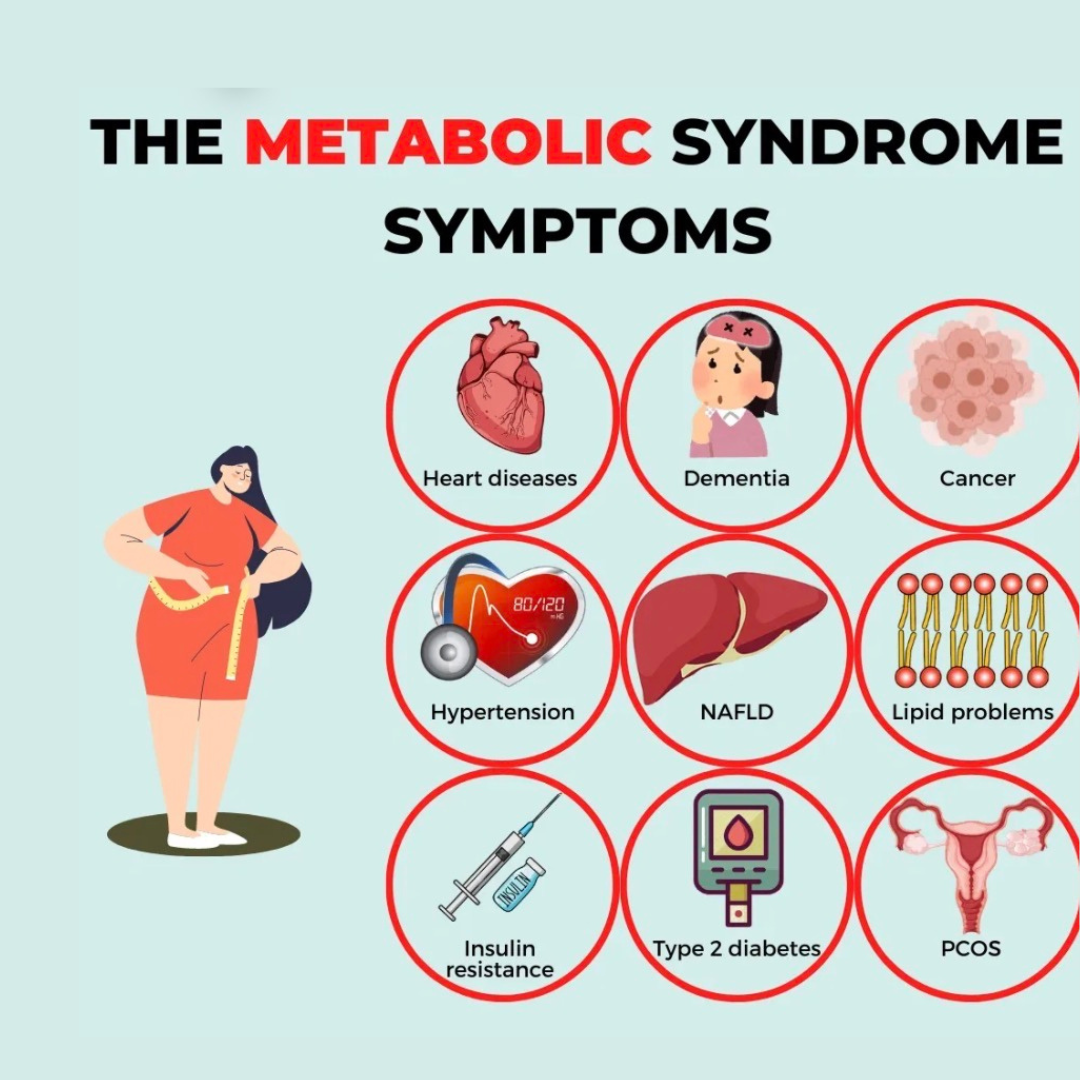
Metabolic Syndrome is a cluster of risk factors that dramatically increases the likelihood of:
Heart disease and heart attacks
Type 2 diabetes
Stroke
Alzheimer’s disease
Metabolic dysfunction–associated fatty liver disease
Diagnosis involves evaluating multiple lab markers and clinical measurements rather than a single test.
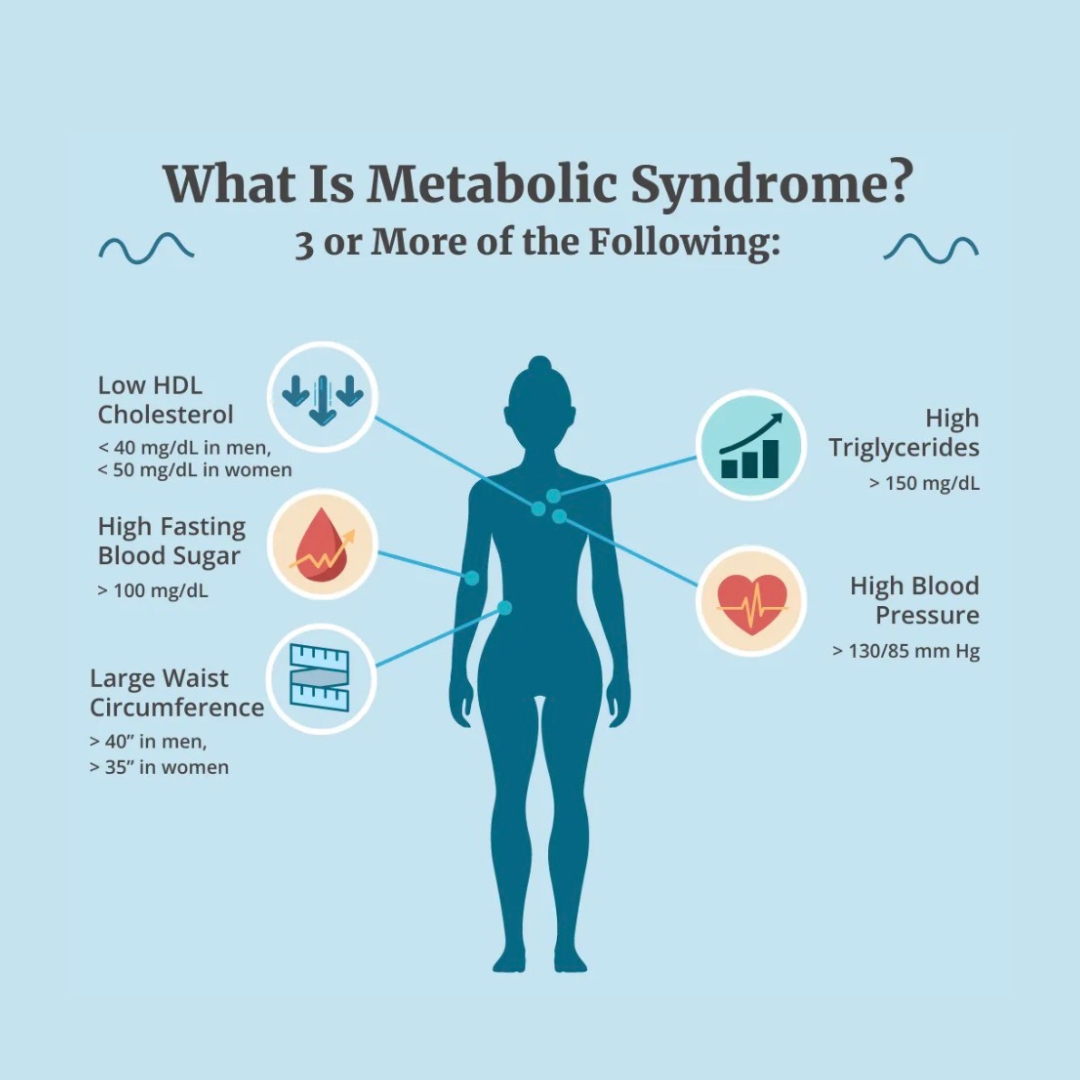
The Five Risk Factors of Metabolic Syndrome
If you have three or more, Metabolic Syndrome is present:
Increased waist circumference
40 inches for men
34 inches for women
Elevated blood pressure (>130/85 mmHg)
Elevated fasting blood glucose (≥100 mg/dL)
High triglycerides (>150 mg/dL)
Low HDL (“good”) cholesterol
<40 mg/dL in men
<50 mg/dL in women
Body Mass Index (BMI) also plays a role. A BMI of 25–29.9 increases MetS risk by 5–6 times. A BMI of 30 or higher raises the risk dramatically — up to 17 times higher for women and 32 times higher for men.
Why Metabolic Syndrome Is Often Missed in Women
Metabolic dysfunction in women is frequently overlooked because its symptoms closely mirror those of perimenopause and menopause. These symptoms include:
Brain fog
Fatigue
Weight gain
Elevated cholesterol
Blood sugar or insulin imbalances
Mood changes
Chronic pain and inflammation
Liver abnormalities
Slow wound healing
Frequent infections
Conditions such as polycystic ovarian syndrome (PCOS) and menopause — both associated with insulin resistance — further increase the risk. This is why proactive, comprehensive testing is essential before symptoms progress into chronic disease.
A Real-Life Example of Metabolic Healing
One of our members with Metabolic Syndrome began using a continuous glucose monitor (CGM) and discovered that grains caused significant blood sugar spikes. This insight empowered her to make sustainable dietary changes even after completing her program.
As a result, she:
Lost 25 pounds
Significantly improved glucose, insulin, cholesterol, and HbA1c levels
Through functional stool testing, we also identified a Helicobacter pylori infection — a common cause of gut inflammation and dysbiosis — which was resolved using natural antimicrobial herbs.
This personalized, root-cause approach is what allows true metabolic healing to occur.
Optimal Metabolic Health Markers
With targeted lifestyle and dietary changes, many members reach these healthy benchmarks:
Fasting insulin: <7 uIU/mL
Fasting glucose: 70–85 mg/dL
HbA1c: <5.4%
HOMA-IR: <2.0
Normal waist circumference
Healthy blood pressure
Balanced lipid levels
Sustainable, healthy weight
How to Fill Your Metabolic Wellness Cup
Nutrition
A nutrient-dense, whole-foods, low-glycemic diet rich in:
Lean protein
Healthy fats
Vegetables
30–40 grams of fiber daily
The Mediterranean diet is strongly supported by research for reducing inflammation, blood pressure, triglycerides, and LDL cholesterol. Adequate hydration is equally essential, water is a key precursor to ATP, the body’s energy currency.
Movement
Both strength training and cardiovascular exercise improve insulin sensitivity and metabolic health. Walking after meals provides an added blood sugar benefit. Whole-body vibration therapy can further support lean muscle mass, bone density, and lymphatic drainage.
Sleep
Quality sleep is non-negotiable. Even one night of poor sleep can reduce insulin sensitivity by 21%. Aim for at least seven hours per night and consider yoga, stretching, or meditation before bed. If sleep is persistently disrupted, a sleep study may be helpful.
Stress Management
Stress alone can drive Metabolic Syndrome. Studies show individuals under high stress have a 45% higher risk of developing MetS. Stress reduction doesn’t need to be time-consuming — even one minute of mindfulness can shift the nervous system. Limiting exposure to news and social media is also crucial.
Connection & Purpose
Human connection is medicine. Isolation amplifies anxiety and inflammation, while meaningful relationships foster resilience. Outdoor walks, hikes, and acts of service can restore a sense of purpose and hope during uncertain times.
You Don’t Have to Do This Alone
Healing is not meant to happen in isolation. We are here to support, guide, and walk alongside you as you restore balance and fill your metabolic wellness cup.
With care and compassion,
Dr. Suzanne Tang & the Inspire Natural Wellness Team